

Kore Meta, an XR education studio focused on experiential language learning, used ShapesXR during the Meta Presence Platform Hackathon to rapidly design and validate spatial gameplay for Multiverse Kaitenzushi, a mixed reality sushi-themed learning experience. ShapesXR enabled fast white-boxing, real-time collaboration, and no-code experimentation, helping the team lock spatial decisions early, reduce production time, and avoid costly redesigns. This workflow contributed to the project being selected as a Top 3 Finalist in the Skill Building Category at the Meta Presence Platform Hackathon 2024.
Kore Meta is an extended reality (XR) education studio with a global team creating immersive learning experiences grounded in culture, storytelling, and spatial design. The studio believes deeply in learning reimagined, learning by doing through fun, interactive, and culturally rich environments. This philosophy led to the creation of Multiverse Kaitenzushi, a mixed reality game where players learn the Japanese alphabet while becoming sushi chefs. Developed during the Meta Presence Platform Hackathon 2024, the project ultimately became a Top 3 Skill Building Finalist, recognized for its innovative approach to language learning in mixed reality.
During the challenge, the team faced two urgent obstacles:
Under time pressure and with no room for coding delays, the Kore Meta team, which consisted entirely of female creators, relied on ShapesXR to rapidly design and test spatial mechanics in real time.
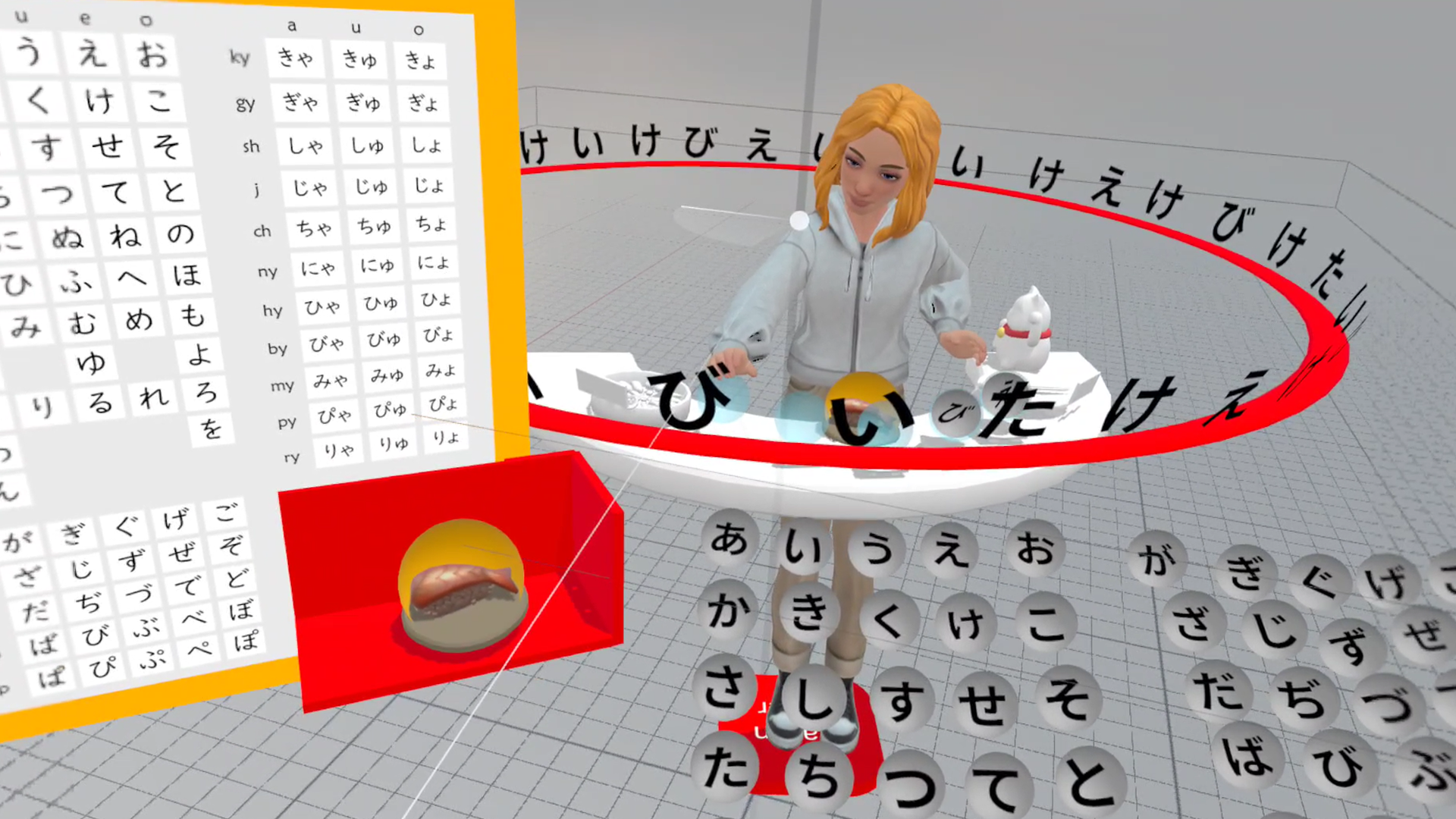
The Kore Meta team used ShapesXR to design the core gameplay environment, the Chef’s Table, which holds the assembly area, tutorial points, and bonus features, and must function with a moving conveyor belt. Using ShapesXR, the team tested different conveyor belt sizes and shapes, multiple table designs, and various interaction distances directly inside the headset. This allowed them to assess reach, line of sight, clarity, and comfort at a real user scale, and the team lead reviewed and approved layouts immediately, which was essential in a competition environment.

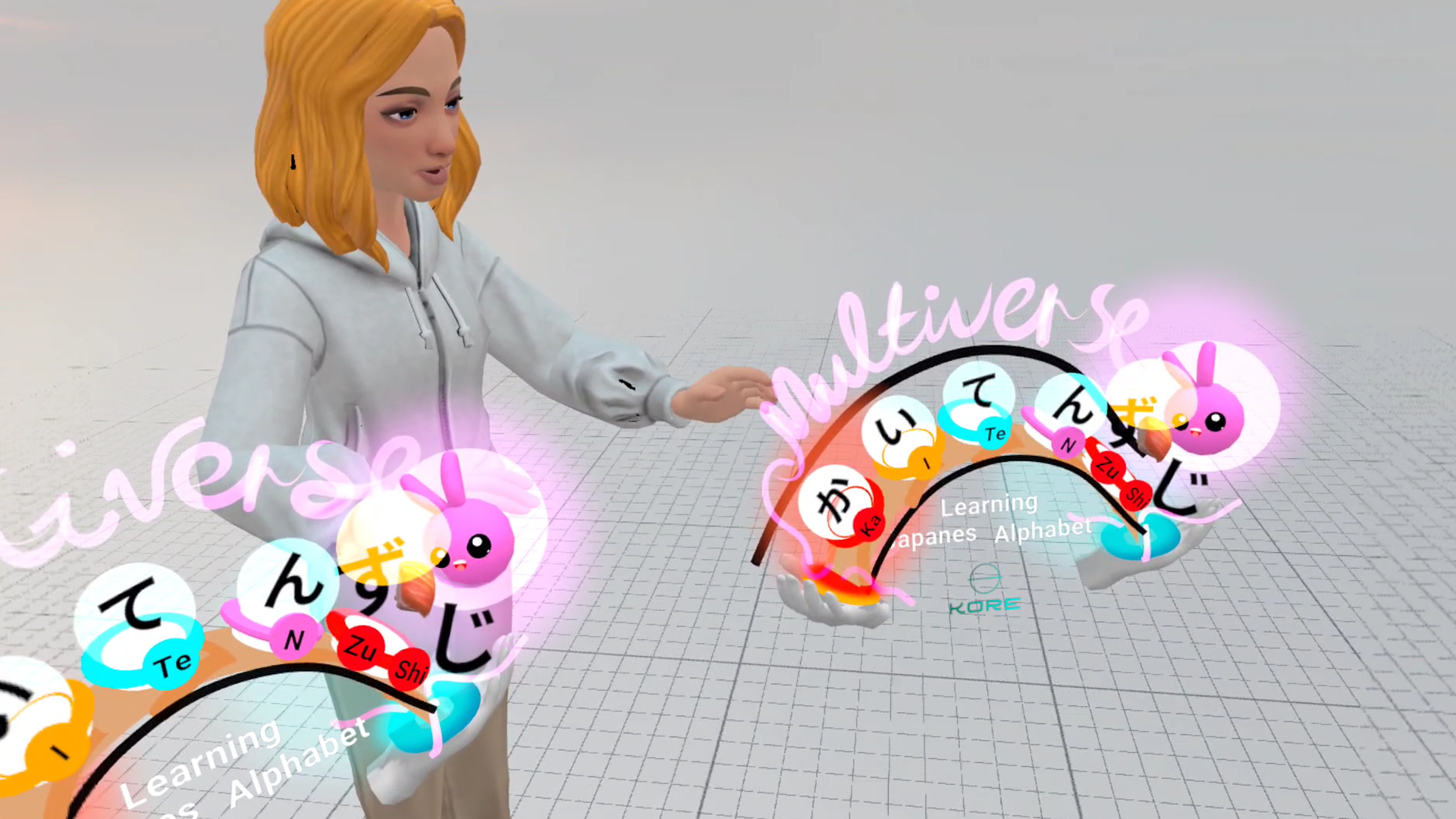
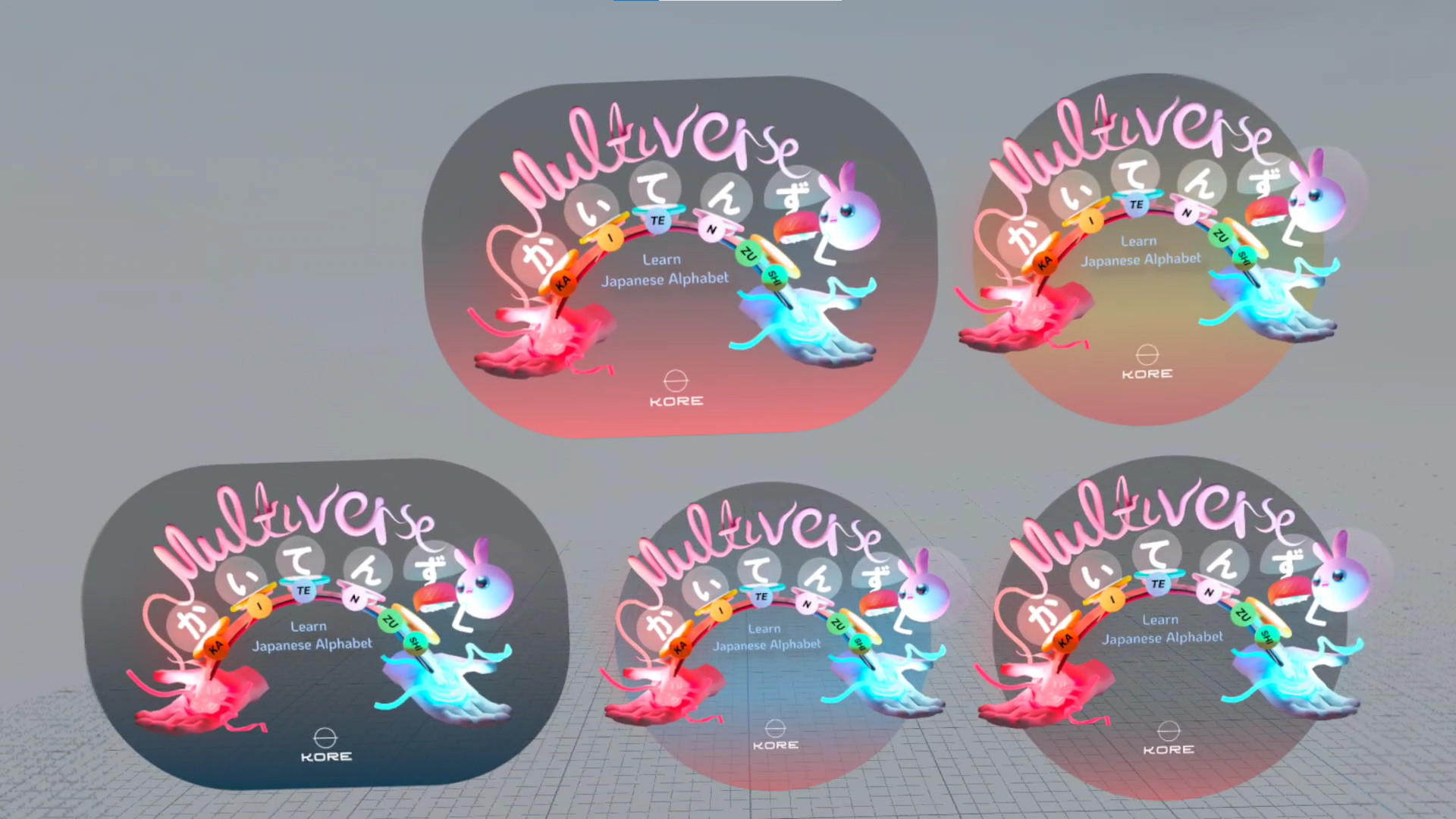
The team also needed tutorial hand animations, a task that normally requires several hours or days. With ShapesXR, they created and exported the hand animations into Unity within one hour. They tested key art inside the space to validate scale, lighting, and opacity before moving into production. For Kore Meta, ShapesXR became more than a prototyping tool. It acted as a companion for fast iteration, instant spatial validation, and immediate design decisions across the early build process.
“ShapesXR allowed us to step inside our ideas and make decisions in real time. It removed the barriers between concept and experience, and that speed was essential to building a prototype that became a Meta Top 3 Finalist.” — Mi Ji Lee, CEO and Founder of Kore Meta

ShapesXR enabled Kore Meta to white-box mechanics, test interactions, and refine spatial features within an hour rather than days. The entire team met inside the same 3D space and made decisions on the spot with no delay, and designers experimented freely through no-code iteration. The prototyper produced seventeen variations focused on layout and mechanic tests without touching Unity, while spatial decisions were locked early, reducing production time and preventing expensive redesigns once work moved into development.
By stepping directly into the game environment, the team evaluated scale, reach, object flow, distance, visibility, and user comfort in real time. This resulted in a clear build vision, fewer design errors, and faster movement toward implementation. ShapesXR now serves as a core part of Kore Meta’s design pipeline, providing clarity, speed, and collaborative decision-making that accelerate spatial development and support effective mixed reality experiences.


%201.png)


